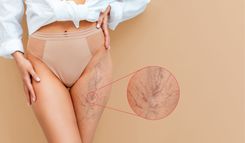
Laser or Vein Glue – Which Treatment is Suitable for Varicose Veins?
The treatment of varicose veins has significantly advanced in recent years. While surgical removal of the vein was often performed in the past, various minimally invasive procedures are now available. Among the most well-known are endovenous laser therapy and vein glue (cyanoacrylate).
But how do the two procedures differ? What are the advantages and disadvantages? And what insights do current scientific studies provide?
How does the treatment with vein glue work?
In the vein glue treatment, a medical cyanoacrylate adhesive is introduced into the diseased vein via a catheter. The adhesive permanently seals the vein, allowing blood to be rerouted through healthy veins.
An advantage of this procedure is that tumescent anesthesia is usually not required.
How does laser therapy work?
In endovenous laser therapy, a fine laser fiber is inserted into the vein. The controlled delivery of laser energy thermally treats the vein wall. As a result, the vein closes and is broken down by the body in the following months.
Laser therapy is now considered one of the established minimally invasive procedures for treating varicose veins.
Direct comparison of laser and vein glue
| Laser Therapy | Vein Glue |
|---|---|
| No foreign materials remain permanently in the body | Medical adhesive initially remains in the treated vein |
| Long-established procedure | Newer procedure |
| Very good scientific data | Good data, but fewer long-term data |
| Precise energy delivery | Chemical closure of the vein |
| Suitable for different vein diameters | Suitability varies depending on anatomy |
Current scientific discussion
In recent years, the treatment with vein glue has been intensively studied scientifically.
The following topics, among others, have been discussed:
- local inflammatory reactions
- foreign body reactions
- allergic reactions
- long-term behavior of the adhesive
- degradation products of the used cyanoacrylate
A laboratory study published in 2026 showed that formaldehyde can be produced during the degradation of various medical cyanoacrylate adhesives. However, the authors explicitly point out that further clinical studies are necessary to assess the significance of these results for patients.
What does this mean for patients?
The current study situation does not mean that treatment with vein glue has been proven to cause cancer.
Rather, scientists are currently investigating what biological effects the substances produced during degradation may have in the long term. Until reliable clinical data are available, no statement can be made about an increased cancer risk in humans.
When can laser therapy offer advantages?
Endovenous laser therapy does not involve adhesives that remain permanently. Instead, the vein is closed by controlled heat and then gradually broken down by the body.
For many patients, it therefore represents a proven and established treatment option. Which method is suitable in individual cases should be decided after a thorough examination in consultation with an experienced vascular specialist.
Conclusion
Both laser therapy and vein glue are among the modern minimally invasive procedures for treating varicose veins.
While laser therapy has been established for many years and does not involve permanent foreign material, the long-term degradation processes of the adhesive are currently being intensively researched in vein glue treatment.
The choice of the appropriate procedure should therefore always be made individually and based on careful medical consultation.
Articles about this topic