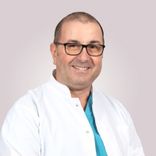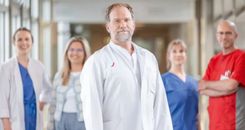
In the Interview Dr. Skander Bouassida
1. Dr. Bouassida, you lead the Visceral Oncology Center at Humboldt Hospital. What diseases does your center focus on?
Our center specializes in diseases of the gastrointestinal tract, particularly colon cancer, rectal cancer, and other tumors of the abdominal organs. Additionally, we treat a high number of complex benign diseases of the rectum and pelvic floor, such as fistulas, incontinence, or chronic inflammatory bowel diseases, whether on an outpatient or inpatient basis.
In the Clinic for Coloproctology, we work as a specialized bowel center in an interdisciplinary manner with oncology, radiology, gastroenterology, radiation therapy, and pathology. For our patients, this means: All relevant specialties are closely integrated, the therapy is individually planned and regularly discussed in the tumor board.
2. What treatment techniques do you use?
In proctology, we use the entire spectrum of modern surgery: Minimally invasive laparoscopic procedures, advanced robotic surgery with the Da Vinci system, modern laser technologies, as well as open surgeries.
Our center has exceptionally high experience: More than 5,000 robotically assisted surgeries, around 1,000 laser treatments, and over 1,000 specialized fistula procedures have been performed by our team. These case numbers are not only a quality feature but provide our patients with one thing above all: Safety.
3. Is Da Vinci robotics the only option for minimally invasive procedures?
No. Robotics is a very powerful tool, but not the only one. The classic laparoscopy is still a proven and established minimally invasive procedure. However, robotic surgery significantly expands these possibilities: It allows for particularly precise, calm, and tissue-sparing operations – especially in complex tumor procedures in the narrow pelvis, such as rectal cancer. The crucial factor is not just the technology, but the experience of the treatment team and the individually suitable selection of the procedure for each patient.
We are also pioneers in minimally invasive proctology. Gentle procedures such as laser technology, plastic-reconstructive techniques, modern tissue-sealing devices, as well as standardized Botox treatment are routinely used by us with very good results.
4. What advantages does laser technology offer for patients?
Laser technology is particularly gentle. It allows certain conditions – such as coccygeal and anal fistulas, pilonidal disease, or hemorrhoids – to be treated with minimal injury to the surrounding tissue.
For those affected, this often means:
- Less pain
- Significantly smaller wounds and therefore reduced likelihood of wound healing disorders
- Faster return to everyday life
- And a significantly reduced risk of functional disorders such as incontinence
Especially in the sensitive region of the rectum, this conservation is invaluable.
5. What experiences have you had with the long-term results after laser treatments?
Our long-term results are very encouraging. With careful indication and standardized procedures, we see stable healing rates, high patient satisfaction, and a significant improvement in quality of life.
Many patients come to us after long periods of suffering. When they can sit, work, exercise, or travel pain-free after treatment, it is both medically and personally very fulfilling.
6. What would you like to say to people who come to your center with a diagnosis of colon cancer or a proctological condition?
Such a diagnosis is always stressful and frightening. Our aim is to combine medical excellence with genuine care.
We take the time, explain clearly, make decisions together, and accompany our patients from the first consultation to follow-up care. Modern technology is important – trust, experience, and humanity are equally so.
Our goal is not only healing but also the preservation of quality of life and dignity.
Articles about this topic