In the Interview Dr. med. Wolff
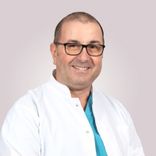
Dr. med. Wolff from the Laser Medicine Center Rhein-Ruhr provides information about hemorrhoidal conditions and their treatment
After her many years of work in various clinics and specialized colorectal centers in Germany and Switzerland, Dr. med. Katja Wolff began her practice at the Laser Medicine Center Rhein-Ruhr in Essen at the beginning of 2019. Dr. Wolff is a specialist in surgery and coloproctology and is, among other things, specialized in treatment using laser therapy.
Dr. Wolff, what diseases do you deal with in proctology?
The word proctology comes from the Greek “proktos” = anus.
In proctology, we deal with all diseases and complaints of the rectum and anal canal. A doctor with this additional qualification often also works as a coloproctologist and therefore also deals with diseases of the intestine (colon).
Typical common diseases include hemorrhoidal conditions, inflammation of the anal skin (anal eczema), tears in the anal mucosa (anal fissures), prolapse of the anal mucosa (anal prolapse), enlarged skin tags at the anus (perianal skin tags), abscesses and fistulas at the anus (anal abscess and anal fistula), and pilonidal disease (pilonidal sinus).
You mention that hemorrhoidal conditions are a common disease. What exactly are hemorrhoids and what symptoms can occur?
Hemorrhoids are vascular cushions located in the rectal mucosa. Hemorrhoids per se are something natural and very important for the fine closure of the anus.
However, when patients talk about “hemorrhoids,” they usually mean symptoms that can arise from, for example, enlarged hemorrhoidal cushions.
Common symptoms include itching, burning at the anus, and a sore feeling at the anus. Additionally, patients often notice blood on the toilet paper and a foreign body sensation at the anus.
For many people, diseases in the rectal area are still a taboo subject. Why is it important to see a doctor early?
Symptoms at the anus are very unpleasant and, due to the fact that blood is seen, quickly trigger a feeling of fear in those affected.
Unfortunately, the anal region and diseases in this area are still taboo. Patients are reluctant to go for a medical examination early because they are afraid of a painful examination and are also embarrassed by the symptoms.
However, an early visit to a proctologist is very important so that a diagnosis can be made and the correct therapy started. In most cases, these are benign diseases, such as a hemorrhoidal condition. Malignant diseases at the anus are overall rare but should be detected early so that they are treatable.
Many diseases are initially treated conservatively, and surgery is not immediately necessary.
You also work with LHP® laser therapy. What are the special features of laser therapy?
In the anal region, many anatomical structures, such as the rectum and sphincter, are located in very close proximity. Therefore, the goal of proctological surgery should always be, as far as medically possible, to preserve the neighboring structures.
The LHP® laser therapy for hemorrhoids is minimally invasive and therefore well tolerated by the patient. In this method, the enlarged hemorrhoidal nodes are reduced and not completely removed. This reduces the risk of sphincter weakness. Patients experience little pain after the operation and can quickly return to their daily activities.
The operation can also be performed on an outpatient basis.
What experiences have you had with laser therapy? (also regarding recurrences)
The patients we have treated so far at the Laser Medicine Center Rhein-Ruhr are satisfied and show no recurrences.
Do you also treat other proctological diseases with laser therapy?
With laser proctology, not only enlarged hemorrhoids but also pilonidal sinuses and anal fistulas can be treated very well.
Pilonidal sinuses can also be treated very well on an outpatient basis with the SiLaC® method, avoiding large wounds that take a long time to heal completely.
The treatment of anal fistulas, the so-called FiLaC® method, is a sphincter-preserving surgical method. Whether the patient is suitable for this method is determined by a thorough proctological examination.
Articles about this topic