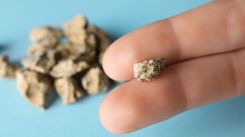
Kidney Stones: Symptoms, Causes, and Treatment
Overview
- Causes: An increased concentration of certain substances in the urine can lead to the formation of crystals and eventually kidney stones. Risk factors include low fluid intake, certain dietary habits, metabolic disorders, and genetic influences.
- Symptoms: Severe, wave-like pain in the side or back, radiating to the lower abdomen or groin, nausea, vomiting, frequent urge to urinate, or blood in the urine.
- Diagnostics: Medical consultation, physical examination, urine and blood tests, as well as imaging techniques such as ultrasound or computed tomography.
- Treatment options: Observation for small stones, medication support, shock wave therapy, endoscopic removal, or surgical procedures.
- Advantages of laser treatment: Precise fragmentation of kidney stones into very small particles, rapid stone disintegration, flexible treatment even in hard-to-reach anatomical areas, as well as minimal stone migration and tissue burden.
What are Kidney Stones?
Kidney stones (Nephrolithiasis) are solid deposits that form from components of urine in the kidneys. They occur when minerals and salts in the urine are present in high concentrations and form crystals. These crystals can grow into stones of varying sizes over time.
Not every kidney stone causes discomfort. Small stones often go unnoticed and are passed with urine. Larger stones or stones that move into the ureter can cause severe pain and obstruct urine flow.
How do Kidney Stones Form?
Kidney stones form when the balance of dissolved substances in the urine is disrupted. If the concentration of certain minerals like calcium, oxalate, or uric acid is too high, crystals can form, which over time develop into kidney stones.
The most common risk factors include:
- insufficient fluid intake
- diets high in calcium, oxalate, or salt
- metabolic disorders
- obesity
- recurrent urinary tract infections
- genetic predisposition
- certain medications
Adequate fluid intake can help reduce the risk of forming new kidney stones.
What Symptoms do Kidney Stones Cause?
Many kidney stones initially cause no symptoms. Symptoms often occur only when a stone moves or blocks the ureter.
Typical symptoms include:
- sudden onset of severe flank pain (renal colic)
- pain radiating to the lower abdomen or groin
- blood in the urine
- nausea and vomiting
- frequent urge to urinate
- painful urination
- restless behavior due to severe pain
If fever or chills occur, immediate medical attention should be sought, as this may indicate an infection.
What Types of Kidney Stones Exist?
Kidney stones differ in their composition. The most common types of stones include:
- calcium oxalate stones
- uric acid stones
- struvite stones (infection stones)
- calcium phosphate stones
- cystine stones
Determining the exact type of stone is important to specifically reduce the risk of recurrence.
How are Kidney Stones Diagnosed?
If kidney stones are suspected, a detailed medical interview and physical examination are initially conducted.
For further diagnosis, the following may be used:
- urine test
- blood test
- ultrasound
- computed tomography (CT)
- X-ray examinations for certain types of stones
These examinations can determine the size, location, and number of stones, and help select the appropriate treatment.
What Treatment Options are Available?
Treatment depends on the size, location, and composition of the kidney stones, as well as the patient's symptoms.
Depending on the situation, the following procedures may be considered:
- watchful waiting for small stones
- medication for pain management
- supporting spontaneous stone passage
- extracorporeal shock wave lithotripsy (ESWL)
- endoscopic stone removal
- laser treatment
- percutaneous nephrolithotomy (PCNL) for large stones
The treating urologist decides individually which method is suitable.
Laser Treatment of Kidney Stones
Laser treatment is now an established procedure for treating kidney and ureteral stones. A thin endoscope is guided through the natural urinary tract to the stone. A fine laser fiber is then introduced to precisely fragment the stone.
Modern thulium fiber lasers enable precise fragmentation or so-called dusting, where the stone is broken down into very fine particles. These can then be excreted with urine or removed during the procedure.
The fine laser fibers can also treat hard-to-reach areas of the kidney. At the same time, the movement of the stone during treatment is minimized, supporting precise therapy.
What Advantages Does Laser Therapy Offer?
Modern laser treatment offers numerous advantages:
- precise fragmentation of kidney stones
- efficient fragmentation and dusting
- treatment of different types of stones
- good accessibility to complex anatomical areas
- minimal stone migration during treatment
- preservation of surrounding tissue
- minimally invasive procedure through natural urinary tracts
- often quick recovery after treatment
What Happens After Treatment?
Depending on the findings, a temporary ureteral stent (DJ stent) or bladder catheter may be necessary after the procedure. Mild discomfort during urination or slight blood in the urine may occur in the first few days.
Drinking plenty of fluids supports the excretion of small stone fragments. Regular follow-up examinations help monitor treatment success and detect recurrence early.
How Can Kidney Stones be Prevented?
The risk of new kidney stones can be reduced through various measures:
- drink enough daily
- balanced diet
- aim for a normal body weight
- regular exercise
- individual dietary adjustments depending on stone type
- treatment of possible metabolic disorders
Patients who have had kidney stones should have the cause of stone formation clarified urologically to specifically prevent recurrences.
Conclusion
Kidney stones are among the most common urinary tract disorders and can cause significant discomfort. Thanks to modern diagnostics and various treatment options, kidney stones can now be treated gently and effectively in most cases. Modern laser procedures, in particular, allow precise stone fragmentation, tissue-sparing treatment, and quick recovery.