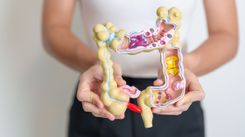
Anal Warts – Modern Treatment of Warts in the Anal Area
Overview
- Causes: Infection with certain types of Human Papillomavirus (HPV), usually through direct skin or mucous membrane contact.
- Symptoms: Palpable warts, itching, burning, feeling of moisture, bleeding, or foreign body sensation.
- Diagnostics: Medical history, inspection of the anal area, and proctological examination, possibly with proctoscopy.
- Treatment options: Medications, cryotherapy, surgical removal, or laser therapy.
- Advantages of laser therapy: Precise removal of warts, preservation of surrounding tissue, and minimally invasive procedure.
What are Anal Warts?
Anal warts are benign skin and mucous membrane changes in the area of the anus. They are also referred to as warts in the anal area, condylomas, or condylomata acuminata and are usually caused by an infection with certain types of the Human Papillomavirus (HPV).
The warts can appear singly or in groups and can form both around the anus and in the anal canal. If left untreated, they can increase in size and number.
What Symptoms Do Anal Warts Cause?
Not all anal warts cause discomfort. Many affected individuals initially notice the changes only by chance.
Common Symptoms
- small warts in the anal area
- itching
- burning sensation
- feeling of moisture
- bleeding
- sensation of a foreign body
- palpable skin changes
How Do Anal Warts Develop?
Anal warts are caused by certain types of the Human Papillomavirus (HPV). Transmission usually occurs through direct skin or mucous membrane contact.
After infection, it can take weeks or months before visible warts appear.
How Are Anal Warts Diagnosed?
The diagnosis is usually made through a proctological examination.
This includes:
- medical history
- inspection of the anal area
- palpation examination
- proctoscopy if necessary
Depending on the findings, further examinations may be advisable.
What Treatment Options Are Available for Anal Warts?
The choice of treatment depends on the size, number, and location of the anal warts.
Conservative Treatment
- topically effective medications
- immunomodulating therapies
- regular check-ups
Surgical Treatment
Larger or extensive anal warts can be removed surgically or with a laser.
Laser Therapy for Anal Warts
Laser therapy is a modern procedure for treating anal warts. The warts are precisely removed under visual control, while the surrounding tissue is preserved as much as possible.
Laser therapy is particularly suitable for larger, multiple, or unfavorably located findings. The goal is the complete removal of visible warts.
What Are the Advantages of Laser Therapy?
Advantages at a Glance
- precise removal of warts
- minimally invasive procedure
- preservation of surrounding tissue
- minimal bleeding
- treatment of larger findings possible
- short recovery time
After the Treatment
After the treatment, careful wound care and regular follow-up examinations are important. Since HPV can remain in the tissue, recurrences are generally possible.